







Key Takeaways On Your Investment Blueprint
What Defines a Growth Suburb
The most reliable suburbs for long term growth exhibit three key factors: new government funded projects, barriers to new construction, and a rising median household income. This is key to finding high growth suburbs in Melbourne.
How to Choose the Right Property
Within a target suburb, a smart investment is a property where the land value constitutes at least 70% of the total purchase cost. This ratio ensures you're buying the appreciating asset which is the land.
How to Purchase Safely
The auction environment can lead to overspending. To protect your capital, it's critical to establish a non-negotiable limit based on a data-driven Comparative Market Analysis before attending an auction.
A Valuer's Top 5 Suburb Analyses for 2026
A theoretical blueprint is not enough. An investor requires actionable intelligence. To demonstrate the power of this framework, here is how the three-step blueprint can be applied to analyse five of Melbourne’s top-performing suburbs, each showcasing a core principle of strategic growth for 2026.
Brighton's Blue-Chip Stability Through Scarcity
Brighton’s long-term value is secured by the ultimate supply constraint: a finite coastline. This physical barrier is reinforced by strict Heritage Overlays, which legally prevent overdevelopment and protect the suburb’s architectural integrity. For an investor focused on wealth preservation, this combination of physical and legislative scarcity makes Brighton a powerful example of land-locked value.
Glen Iris's Unwavering Demand from School Zones
While scarcity protects Brighton, relentless demand from families supercharges property values in Glen Iris. The suburb is home to several of Melbourne’s most sought-after public and private school zones, creating a non-negotiable driver of demand that is insulated from market cycles. This ensures a consistent pool of high-quality tenants and future buyers.
South Yarra's High-Yield Boutique Opportunities
South Yarra’s value is driven by transport infrastructure and its proximity to high-income employment hubs. For the astute investor, the strategy here often involves bypassing generic high-rise towers to acquire unique apartments in smaller, boutique blocks. These assets can deliver higher rental yields and appeal to a more discerning tenant demographic.
Caulfield's Gentrification Growth Indicators
Caulfield demonstrates the power of tracking demographic shifts. A rising median household income, coupled with a surge in council permits for high-quality renovations, provides a clear signal of ongoing gentrification. An investment strategy here could focus on acquiring assets just ahead of the market’s peak perception.
Malvern's Scarcity of Individual Land Titles
In Malvern, some of the most valuable assets are villas or townhouses on individual land titles with no shared Common Property. This specific asset type is exceptionally scarce. An investor who can identify and acquire these properties gains a significant advantage, as they are highly sought after by downsizers and are viewed by lenders as lower-risk securities.
A Glance On The Key Growth Drivers of Our Top 5 Suburbs
| Suburb | Primary Growth Driver | Investor Focus for 2026 |
|---|---|---|
| Brighton | Physical & Legislative Scarcity | Secure blue-chip assets for long-term wealth preservation. |
| Glen Iris | Elite School Zone Demand | Acquire family homes with consistent, high-quality tenant appeal. |
| South Yarra | Transport & Employment Hubs | Identify high-yield apartments in unique, boutique blocks. |
| Caulfield | Demographic & Gentrification Shift | Purchase properties ahead of the peak to capitalise on rising incomes. |
| Malvern | Scarcity of Specific Asset Types | Target villas/townhouses on individual titles with no Common Property. |
The 3-Step Blueprint for Identifying High-Growth Suburbs
To identify a suburb positioned for growth, a professional investor disregards marketing hype and focuses on the fundamental economic drivers of demand. This is the simple, three-step blueprint used to identify exceptional investment locations before they become widely known and overpriced.
Step 1: Follow the Government's Money
The Physical Job (What to Actually Do)
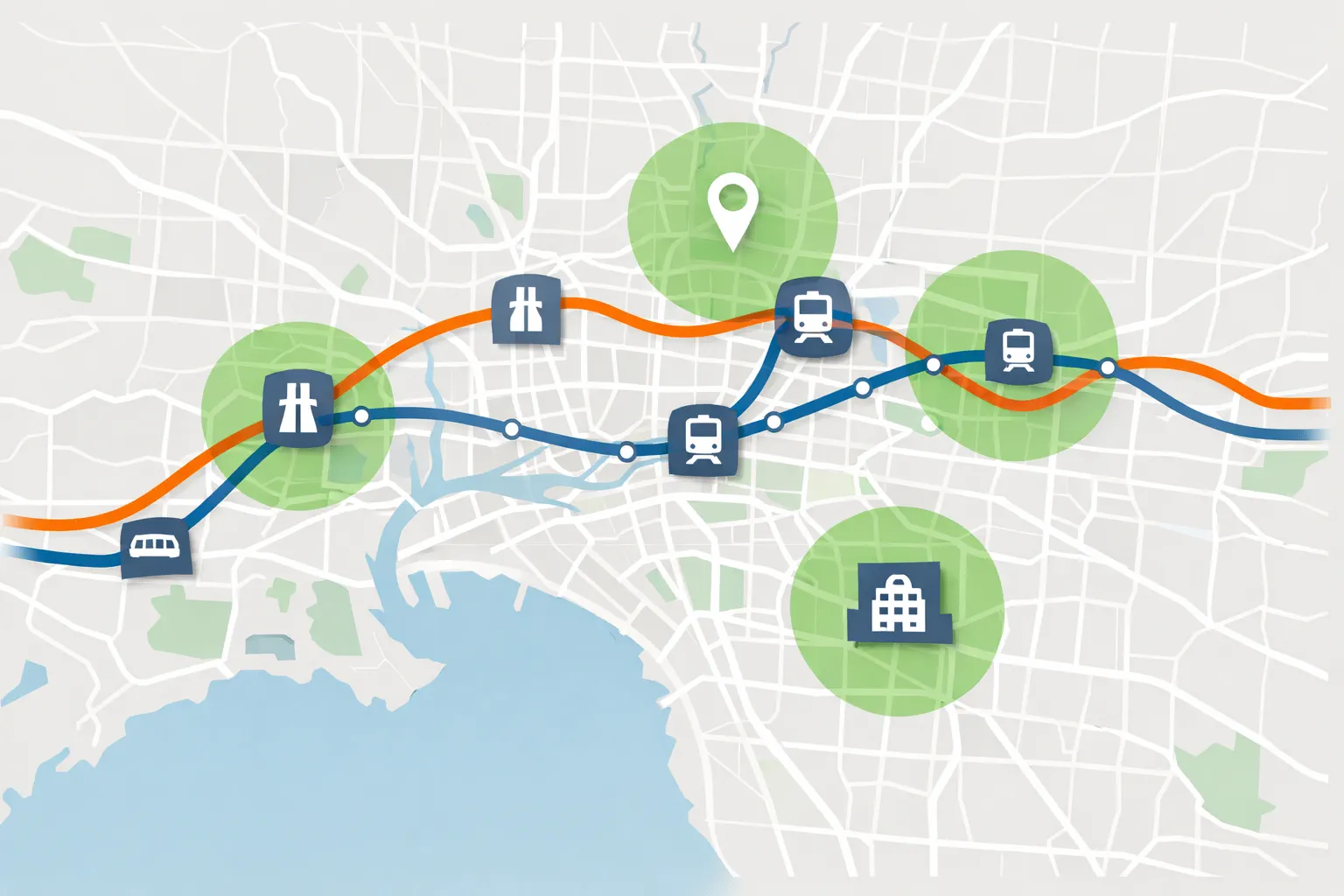
Use the official Victoria’s Big Build website to map out suburbs that will directly benefit from funded, large-scale projects such as the Metro Tunnel and North East Link, which are set to redefine commuting and property values in the lead-up to 2026.
Why This Matters for Your Money (The Consequence)
When the government commits billions to an area, it signals future desirability. Improved transport adds significant long-term value and boosts rental demand.
Step 2: Identify Land-Locked Suburbs
The Physical Job (What to Actually Do)
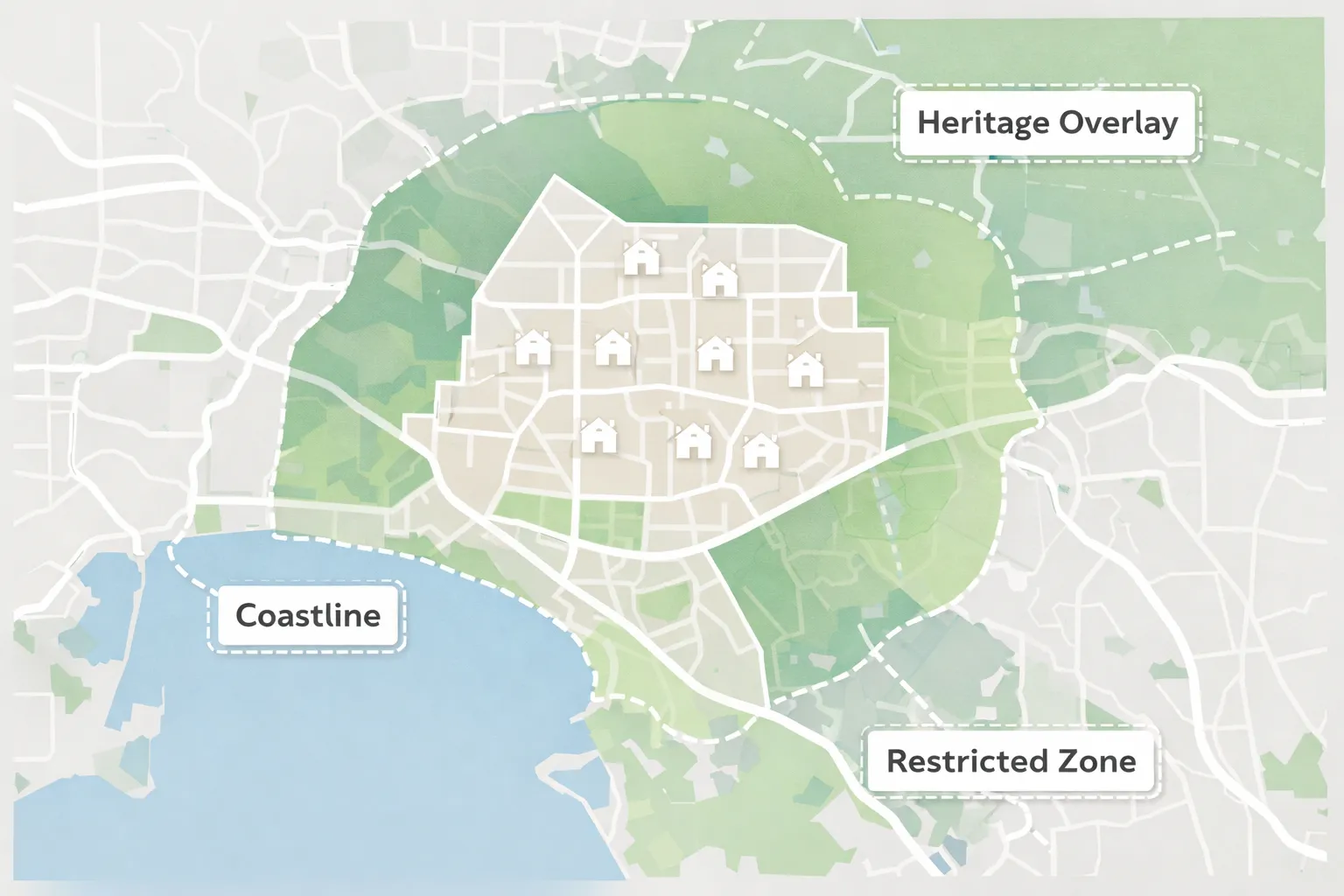
Use Google Maps and council planning schemes to find suburbs physically constrained by coastlines and national parks, or legislatively restricted by strict Heritage Overlays.
Why This Matters for Your Money (The Consequence)
This is a simple supply-and-demand equation. If demand increases but no new homes can be built, the value of existing property is forced upward, securing a strong return.
Step 3: Track High-Income Migration
The Physical Job (What to Actually Do)
Use the Australian Bureau of Statistics portal to identify suburbs where the Median Household Income is growing faster than the state average.
Why This Matters for Your Money (The Consequence)
A rising local income indicates higher-earning professionals are moving in. This leads to better amenities and creates a cycle of desirability that drives the median house price up.

How to Select an Investment-Grade Asset
Identifying a growth suburb is only half the task; selecting the correct asset within it is the other. A core principle of valuation is that land appreciates over time, while the building on it depreciates. This is the foundation of any sound investment strategy.
The Core Financial Rule: The Land-to-Asset Ratio
The safest investments are assets where the land itself constitutes at least 70% of the total purchase price. This calculation is one of the most effective tools for avoiding poor decisions when searching for the top investment suburbs in Melbourne for 2026.
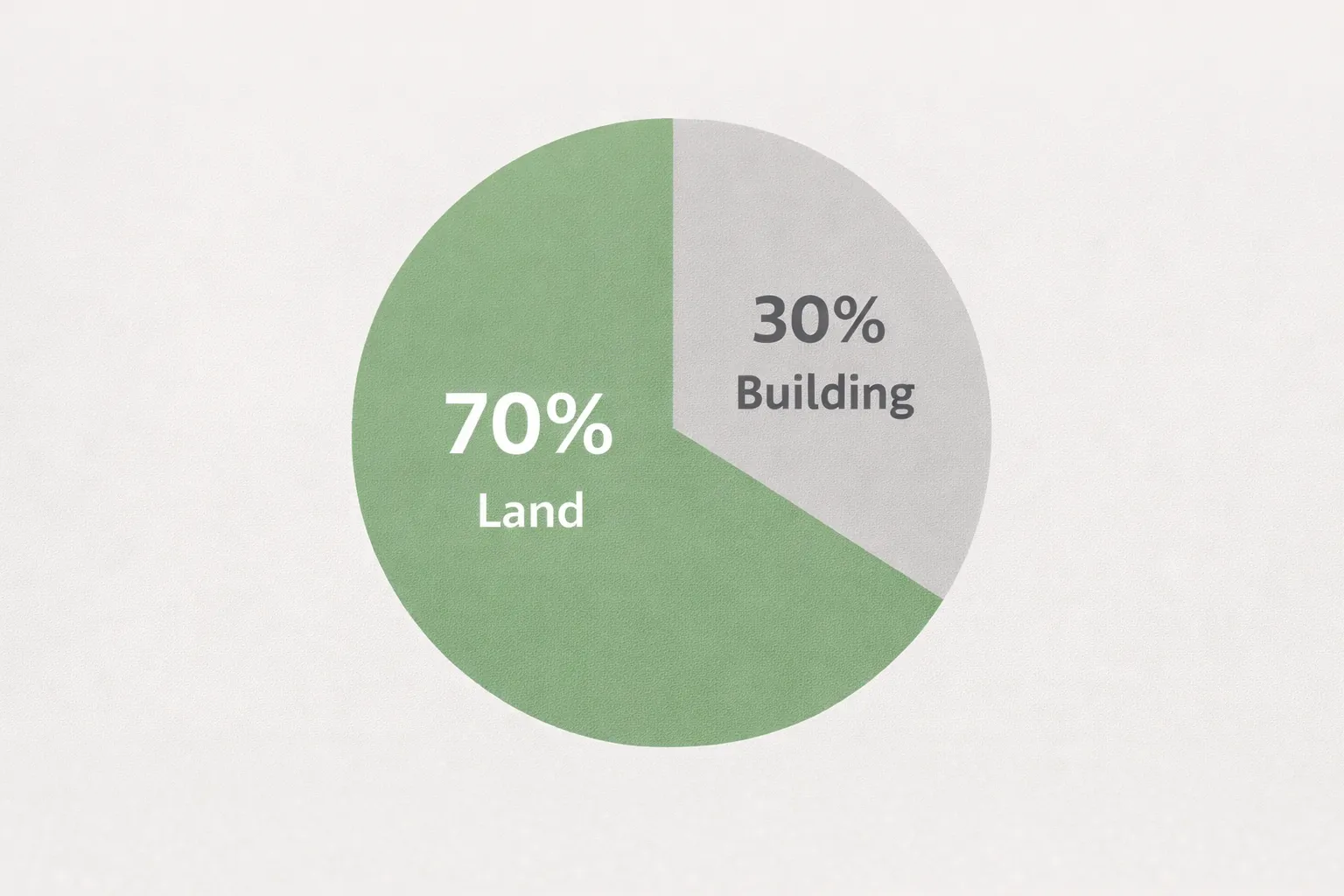
- How to Calculate It: The Site Value of a house can be found on its official council rates notice. To find the ratio, you divide the site value by its asking price. A result of 0.70 or higher meets the professional benchmark for a good rental return and high yield. Our team uses this exact calculation as a non-negotiable filter to discard any asset that’s over-capitalised on the building.
- The Anxiety Audit: Many buyers fear they’re overpaying for a fancy kitchen. This 70% rule directly addresses that fear. It provides an objective, evidence-based reason to walk away from a home where you’re paying too much for the physical structure. This ensures your funds are invested in the component that truly drives long term wealth. This is a critical outlook for 2026.
Need help with your investment strategy?
An expert can map out your goals and give you exclusive access to off-market properties that fit this data-driven blueprint.
Your Action Plan On How to Find Investment Properties
This is a practical, step by step guide for investors you can follow to begin identifying high growth suburbs in Melbourne for yourself.
Step 1: Create Your Infrastructure List
Go to the official Victoria’s Big Build website. Focus on the map view for major transport projects like the Suburban Rail Loop or significant freeway upgrades. Create a spreadsheet listing every suburb that’ll directly benefit from these investments.
Step 2: Filter by Demographics
Take your list to the free Australian Bureau of Statistics website. For each suburb, find the information for the median household income and its median price. You’ll need to compare its growth rate over recent years to the Victorian average. Remove any suburbs with stagnant income growth. These trends are important for 2026.
Step 3: Confirm the Supply Limits
For your remaining suburbs, use Google Maps to check for physical boundaries like coastlines or national parks. Then, visit the relevant local council website and search for its planning scheme to identify any Heritage Overlays that restrict new development. This final step will leave you with a solid list of some of the best investment suburbs that align with the blueprint for long term capital growth and excellent rental yield.

Frequently Asked Questions About Property Investment
A buyer's agent who is also a Certified Practising Valuer provides a critical advantage by removing the conflict of interest inherent in a typical transaction. A selling agent is legally bound to the seller to achieve the highest possible sale amount. In contrast, a buyer's agent and valuer work exclusively for the buyer. They have a legal and professional duty to determine a house's true market value based on objective evidence. This ensures your purchase is based on facts rather than emotion or marketing, which directly protects your funds.
Access to off-market homes comes from professional relationships and a reputation for efficiency. Selling agents will often present a house to trusted buyer's agents before listing it publicly because they know the agent's clients are pre-qualified and ready to transact. This provides the seller with a fast, discreet, and certain sale. For investors, the primary benefit is access to high quality homes without facing the intense public competition that often drives up prices at auctions. This increases the potential for a better rental return.
While many institutions release forecasts, a prudent strategy for savvy investors shouldn't rely on a single prediction. Instead, it should focus on the underlying fundamentals that create resilient value. For the Melbourne market, this means identifying assets in Melbourne's top investment suburbs with a high land-to-asset ratio and strong rental yields. A property that fits these criteria for 2026 is well positioned to perform positively regardless of broader market fluctuations.
Ni Advocacy
Melbourne Buyers Agency
Ready to map out your goals?
If this data-driven approach makes sense, the next step is a one-on-one session to map out your goals and apply this blueprint to your situation.