

Key Takeaways for Property Investors
Yes, Melbourne is a premier investment location
One of the key pros of an investment property here is the fundamental shortage of dwellings, which creates long-term upward pressure on property values and rental income.
Focus on leading indicators, not old news
Data points such as the surge in investor lending and high rental demand are critical because they reveal what sophisticated investors are doing now in the housing market.
Use a repeatable playbook to find growth
For those wondering where to target right now, the most reliable opportunities are found by tracking multi-billion-dollar government infrastructure projects and their impact on local suburbs.
Protect yourself from overpaying
The final step in any sound investment is to secure an independent, certified valuation to ensure the price is justified by hard data, mitigating a key risk for any house. For more insights on our unique approach, explore The Valuer's Edge.
Three Data Signals Defining Future Property Values
To make a smart decision, an investor must look at leading indicators: the data that signals future growth, rather than focusing on old news. When comparing the two major cities, these underlying signals from our detailed Melbourne market analysis show substantial potential. Here are three critical signals for the local market.
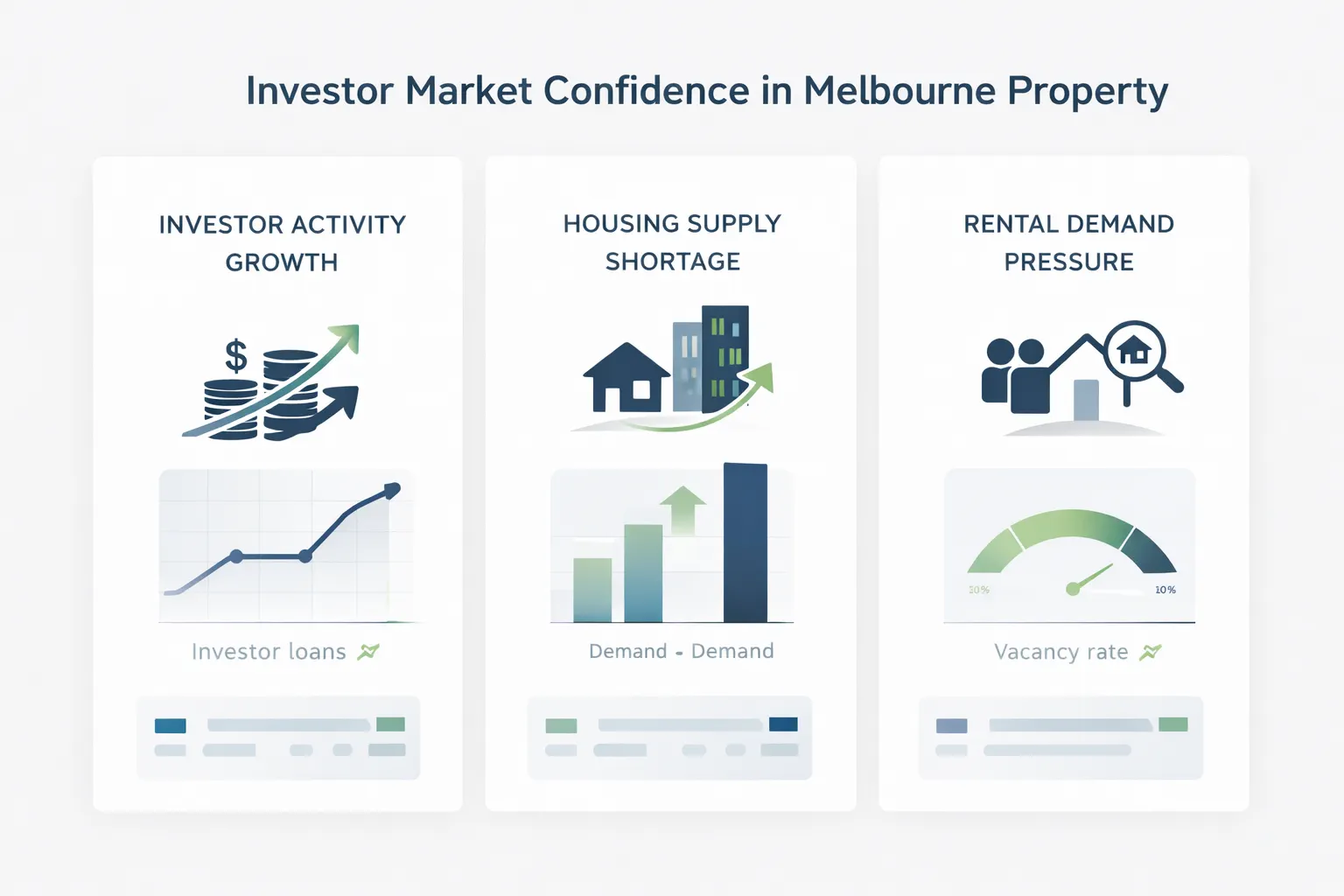
The Signal
1. The Smart Money is Returning
The Data Point
New investor loan commitments in Victoria surged, contributing to a 23.6% national year-on-year increase as of the December 2025 quarter.
The Strategic Implication (The So What)
This is the most important signal. It shows that sophisticated investors, who operate on data, are already acquiring assets. This early movement often precedes a broader market upswing, creating a window of opportunity to buy with less competition and secure assets primed for capital growth.
The Signal
2. There is a Structural Shortage of Homes
The Data Point
The population is growing significantly faster than new homes are being built, with building approvals 15% below the 10-year average.
The Strategic Implication (The So What)
This is a fundamental economic imbalance. The constant, rising interest in a limited supply of homes creates long-term upward pressure on both house values and the median rent. This sustained demand underpins the stability of the entire real estate property market, making it a top long-term investment city.
The Signal
3. The Rental Market is Under Extreme Pressure
The Data Point
Melbourne’s city-wide vacancy rate is a tight 1.4%, with some suburbs like Bayswater and Brunswick West below 1%.
The Strategic Implication (The So What)
An extremely low vacancy rate is a direct indicator of undersupply in rental properties. This is a powerful precursor to capital growth, as high rental demand and rising rents make an area significantly more attractive for real estate investment, drawing in more buyers and pushing values higher.
Ready to Invest with Confidence?
We build data-driven acquisition plans to help you secure the right Melbourne property. Let’s create yours today.
A 3-Step Playbook for Where to Invest
Once the why is established, the next logical question for an investor is where. A systematic approach is required to identify suburbs poised for growth over the next 3-5 years. This involves tracking capital flows, infrastructure development and demographic shifts to find the right opportunities, forming the basis of a solid investment strategy.
Step 1: Follow the Money by Tracking Major Infrastructure
Go to the official Big Build website. Identify major transport projects like the Metro Tunnel, which became fully operational in February 2026, and note their capital cost. Map the suburbs that’ll directly benefit from this new infrastructure.

Multi-billion dollar government spending is a powerful catalyst for growth, potentially adding 5-7% to local property values over the next decade. It fundamentally improves the liveability and accessibility of a suburb, attracting new residents and businesses, which in turn drives land values up as interest outstrips the available supply of houses.
Step 2: Identify and Isolate Economic Hubs
Use Google Maps to locate clusters of large-scale employers that cannot be easily relocated. These include major hospitals, such as The Alfred, university campuses, such as Monash, and established technology parks.

These hubs create a deep and consistent pool of high-income tenants who want to live near their workplace. This de-risks an investment by ensuring lower vacancy rates and reliable rental income, even during broader economic downturns. Proximity to these employment centres ensures your asset is always in high demand.
Step 3: Track the Ripple Effect into Neighbouring Suburbs
Use a property data portal like Domain or CoreLogic. First, record the median sale value for an established, premium suburb, such as Canterbury. Second, record the median value for the adjacent, less expensive suburb, such as Balwyn North. A buyer’s agent uses this data to map out future growth corridors. Tools like Cotality’s Mapping the Market report can help visualise these trends.
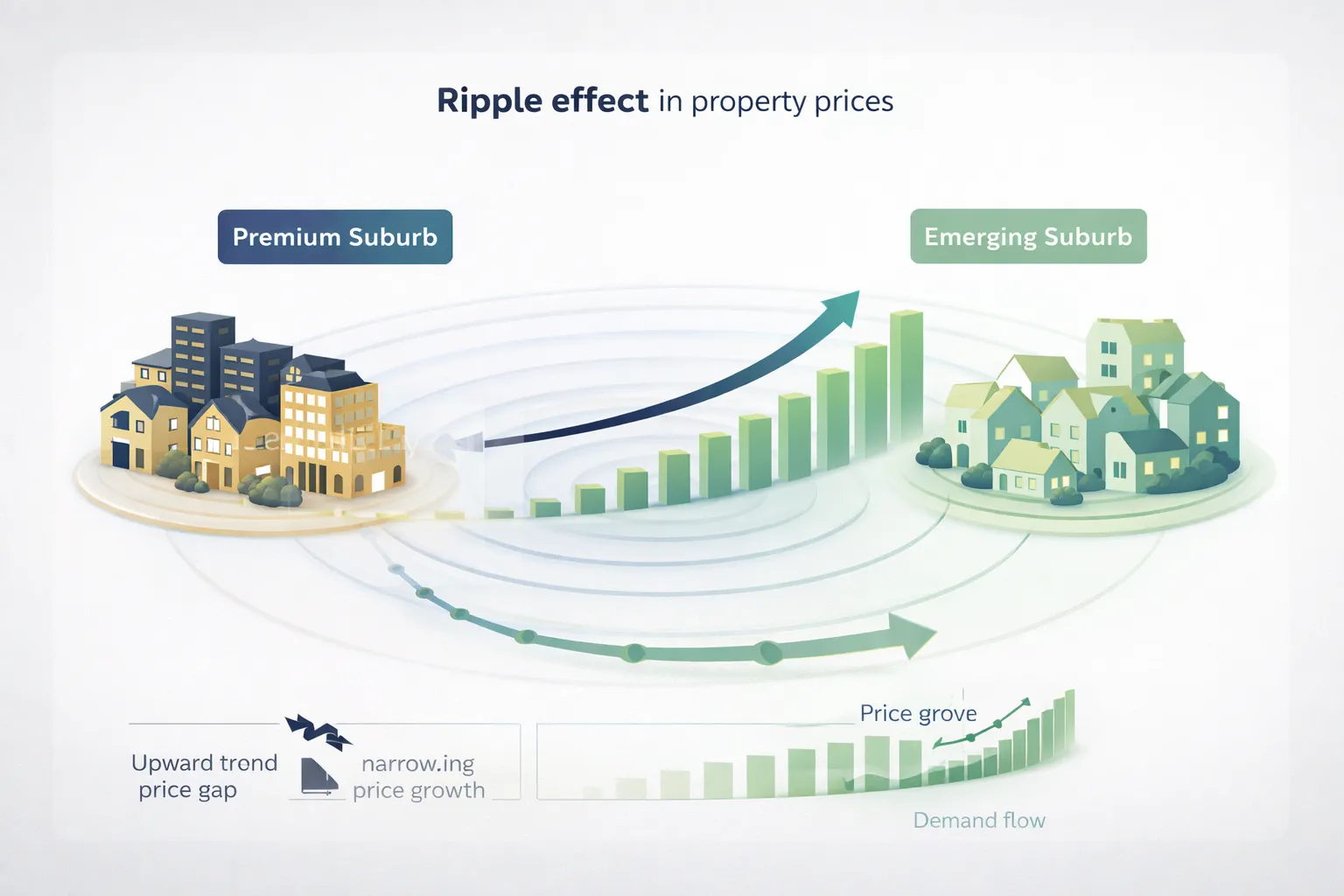
When buyers are priced out of a premium suburb, they seek homes in the next best neighbouring area. This predictable demographic shift creates a wave of demand that drives up prices in the adjacent suburb, offering a clear growth strategy. It’s a classic case of chasing value, and we’re all about getting our clients ahead of the pack to capitalise on that momentum.
Mitigating Risk in Your Investment
Identifying a promising asset is only half the process. The most critical step is to ensure the purchase price is justified by objective data. This removes emotion and marketing hype from the decision-making process, addressing one of the major cons of the local market when not managed correctly.
A real estate agent’s price guide is a marketing document designed to serve the seller. A formal valuation, conducted by a Certified Practising Valuer recognised by the Australian Property Institute, is a legally recognised assessment of an asset’s true market worth based on hard evidence and comparable sales data.

An investor’s single greatest risk is overpaying. An independent valuation provides a hard, data-backed price limit, giving you a significant advantage in any negotiation and the confidence to walk away from a deal that doesn’t stack up financially. It’s the ultimate safety net in a competitive market.
FAQs About Real Estate Investing
Yes, for those with a long-term strategy, it's a favourable time. The city's strong population growth continues to outpace new development, with projections from the Australian Bureau of Statistics confirming an annual growth rate for Victoria of up to 1.5%. This structural undersupply creates sustained demand, supporting both long-term capital growth and high rental demand, making it a robust market for discerning investors prepared to look beyond short-term fluctuations.
Investing here has clear advantages and disadvantages. The primary benefits stem from robust fundamentals such as population growth, while the drawbacks stem from costs and competition.
- Pros: High population growth fuelling demand, a diverse economy with stable employment hubs including universities and hospitals, and significant ongoing government infrastructure investment which directly boosts values in connected suburbs.
- Cons: High entry costs, including significant stamp duty, substantial competition for premium assets, which can inflate values, and market sensitivity to national interest rate changes, which can affect borrowing capacity.
Melbourne often presents a more accessible entry point. While cities like Perth (21%), Brisbane (16.2%), and Adelaide (16%) have seen explosive growth, Melbourne's more moderate 4.7% rise over the 12 months to June 2025, as noted in Cotality's National Home Value Index, signals a market with more stable and sustainable potential. While Sydney often grabs the headlines, Melbourne is the quiet achiever, consistently kicking goals for long-term investors.
The greatest opportunities are typically in suburbs positioned for future capital growth. This includes areas along new infrastructure corridors, such as the Suburban Rail Loop. For instance, suburb-level data from Domain shows areas like Frankston recording 11.7% annual growth to October 2025. You'll also find insights on our top 5 suburbs to watch. Pinpointing suburbs with established economic hubs also provides a lower-risk investment due to a consistent, high-quality tenant pool.
The future outlook is strong, underpinned by long-term demand drivers. The Victoria in Future 2023 report projects the state's population will hit a staggering 10.3 million by 2051. This massive influx, combined with a constrained housing supply, creates a powerful formula for sustained price growth. It’s why a recent KPMG forecast predicts Melbourne house prices will rise by 6.8% in 2026 alone, leading the nation and cementing its status as a premier investment hotspot.

Ni Advocacy
Melbourne Buyers Agency
Start Your Melbourne Property Journey
Our expert team is ready to guide you. Secure your financial future with a strategic property investment today.